Snap shoot spots in Japan: where and when to shoot in Tokyo, Kyoto and Osaka
- Famous spots are quietest early in the morning. For Kyoto's shrines and alleys, go just after sunrise.
- Photography is banned on some private streets in Kyoto's Gion, and Tokyo's Shinjuku Gyoen asks even personal shoots to submit a notification form.
- Wedding or professional shoots at shrines and temples often need an advance application. Check with each site first.
Japan is close to Korea with similar seasons, which makes it a popular place for travel snaps. But the more famous a place, the more crowded it is, and each shrine, garden and alley has its own rules. Here are popular scenes and times by city. Rules can change, so check each site's information again before you shoot.
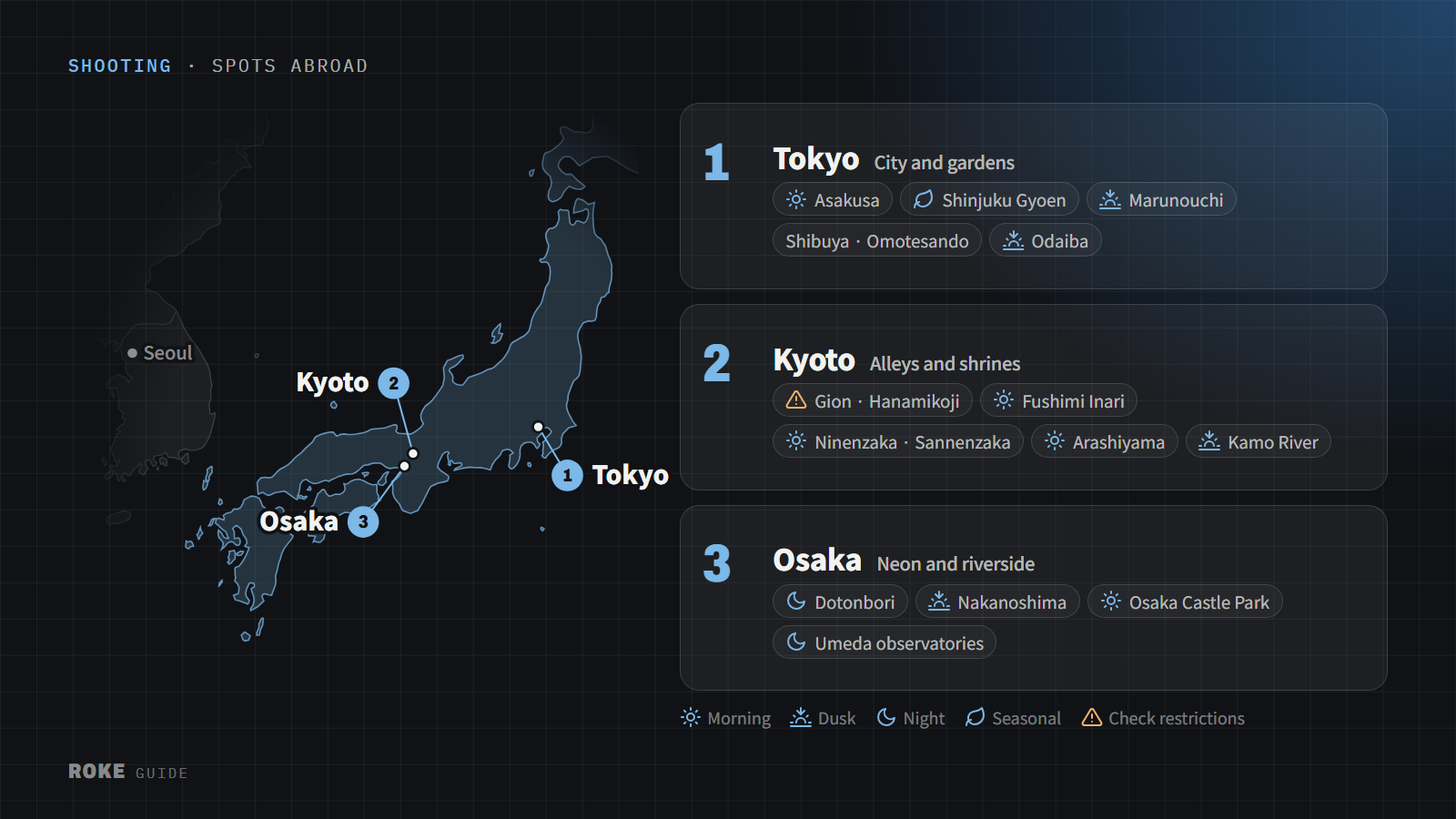
Tokyo: city and gardens
| Place | Scenes | Timing and notes |
|---|---|---|
| Asakusa (around Senso-ji) | Traditional streets, kimono snaps | Crowded with tourists by day, so early morning is best. Don't block worshippers |
| Shinjuku Gyoen | Seasonal gardens: cherry blossoms, autumn leaves | ¥500 admission. Personal shoots also submit a notification form, and gear is limited to what one person can carry (no trolleys) |
| Around Tokyo Station's Marunouchi building | Red-brick building, city night views | From dusk until after the lights come on. Heavy foot traffic in front of the station |
| Shibuya and Omotesando | Street snaps, fashion | Don't stop to shoot on crossings. Don't block shopfronts for long |
| Odaiba waterfront | Sea and bridge night views, couple snaps | Around sunset. On windy days, be ready for hair and outfits to blow about |
Kyoto: alleys and shrines
| Place | Scenes | Timing and notes |
|---|---|---|
| Gion and Hanamikoji | Traditional wooden streets | A local council has banned photography on some private streets since 2019; in 2024 the council was reported to be putting up signs banning entry and warning of a ‘¥10,000 fine’. Always check the signs |
| Fushimi Inari Taisha (Senbon Torii) | Path lined with red torii gates | Quietest just after sunrise. Don't block the path; check with the shrine first about professional shoots and drones |
| Ninenzaka and Sannenzaka | Kimono snaps, stone-stepped lanes | Early morning before shops open. Don't linger in the middle of the steps |
| Arashiyama Bamboo Grove | Green forest path | Early morning. The path is narrow, so it's best to skip the tripod |
| Kamo River banks | Riverside walks, sunset | Around dusk. Keep people sitting by the river from appearing large in the frame |
Osaka: neon and riverside
| Place | Scenes | Timing and notes |
|---|---|---|
| Dotonbori | Neon signs, night snaps | After sunset. Bridges are crowded, so keep it short |
| Nakanoshima | Modern-era architecture and riverside | Late afternoon to sunset. Check with the venue before shooting inside buildings |
| Osaka Castle Park | Castle, moat, cherry blossoms | Spring and autumn mornings. Crowded on event days |
| Umeda high-rise observatories | City night views | Paid observatories have their own tripod and photography rules, so check |
Good to know when shooting in Japan
- Shrines and temples — Wedding photos or professional shoots within the grounds often need an advance application and a fee. They're treated differently from ordinary visitors' souvenir photos, so check ahead if you're with a photographer.
- Private property and shopping streets — Alleys and shopfronts are mostly private property. Don't block shop entrances or linger in front of signs.
- Other people's faces — Japanese TV and social media often blur passers-by's faces. Blurring recognisable faces before posting is the safer choice.
- Photographer's residence status — A foreign photographer entering as a tourist and shooting for pay is an activity the Temporary Visitor status does not allow. See how to write a travel shoot announcement.
- When it rains — Have one indoor studio lined up. Japan has many photo studios and rental spaces bookable by the hour.
ROKE is gathering shoot locations and photographers in Tokyo and Osaka. If you need an indoor place for a rainy day, describe the scene you want under ‘Request a scene’ and we'll reply with places that fit.
Shinjuku Gyoen information is based on the personal photography notification form of Shinjuku Gyoen National Garden (Ministry of the Environment, Japan), the Gion information on Japanese media reports from 2019 and 2024, and Fushimi Inari timing on Japanese photography guide sites (checked November 10, 2026). Site rules can change, so check with each site before shooting.